
Bridging the Gap: Empowering Japanese Students in International Schools
The Challenge: Why Exposure Isn't Enough
Do you have Japanese students who need more support to improve their English? If so, I would be pleased to assist them considerably. I have successfully worked with Japanese students at international schools in Holland, Germany, and Belgium.
A Tailored Approach for Every Need
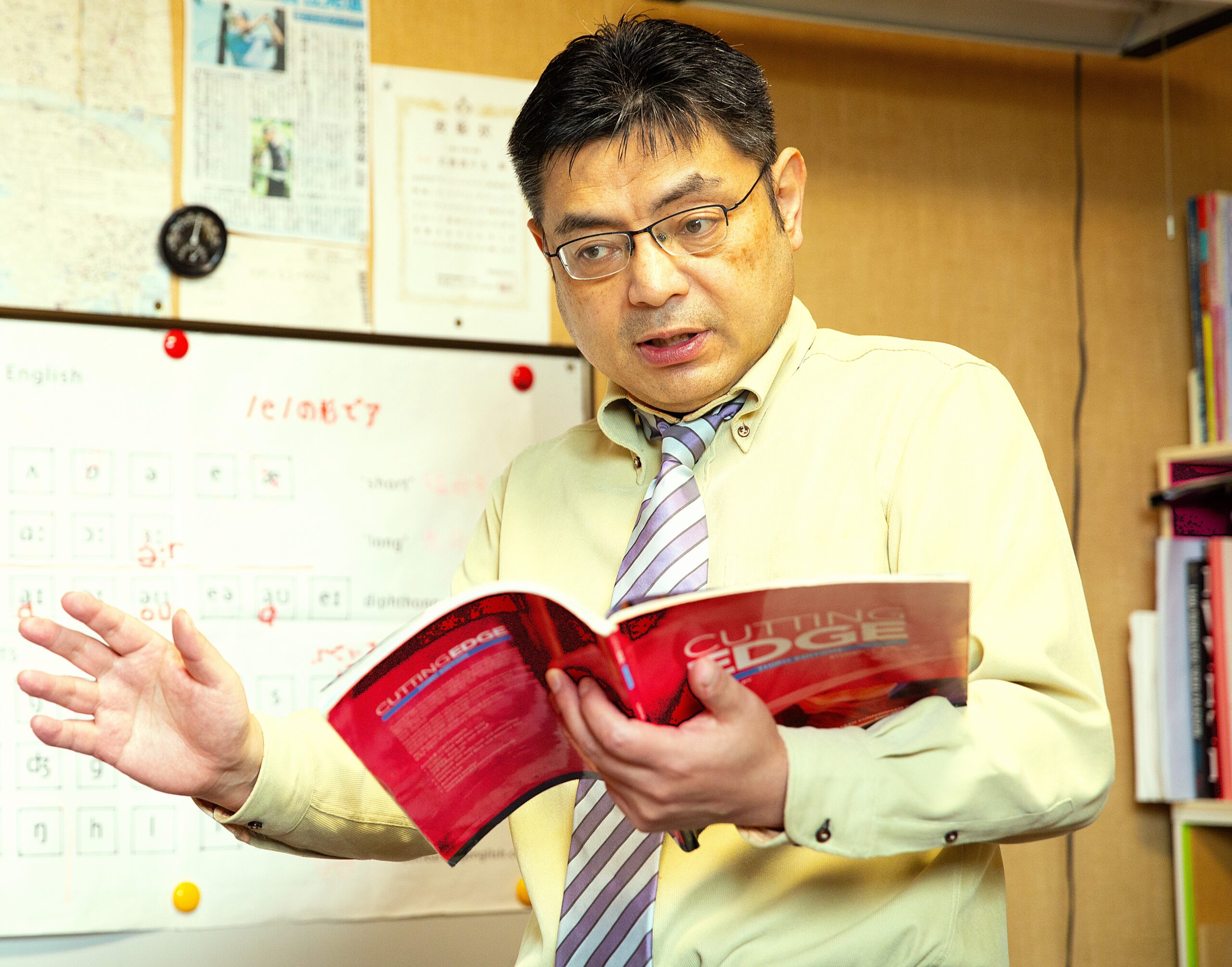
My name is Yasuhiro Shimizu. I am the owner and English consultant of Esteem School of English in Kanazawa City, Japan. I am writing to introduce you to bespoke private English lessons designed for Japanese students who either require professional one-to-one assistance in improving their English to supplement education they receive at your institution or need to prepare for Japanese junior and high school entrance examinations when they eventually return to Japan.
Understanding the CALP Gap
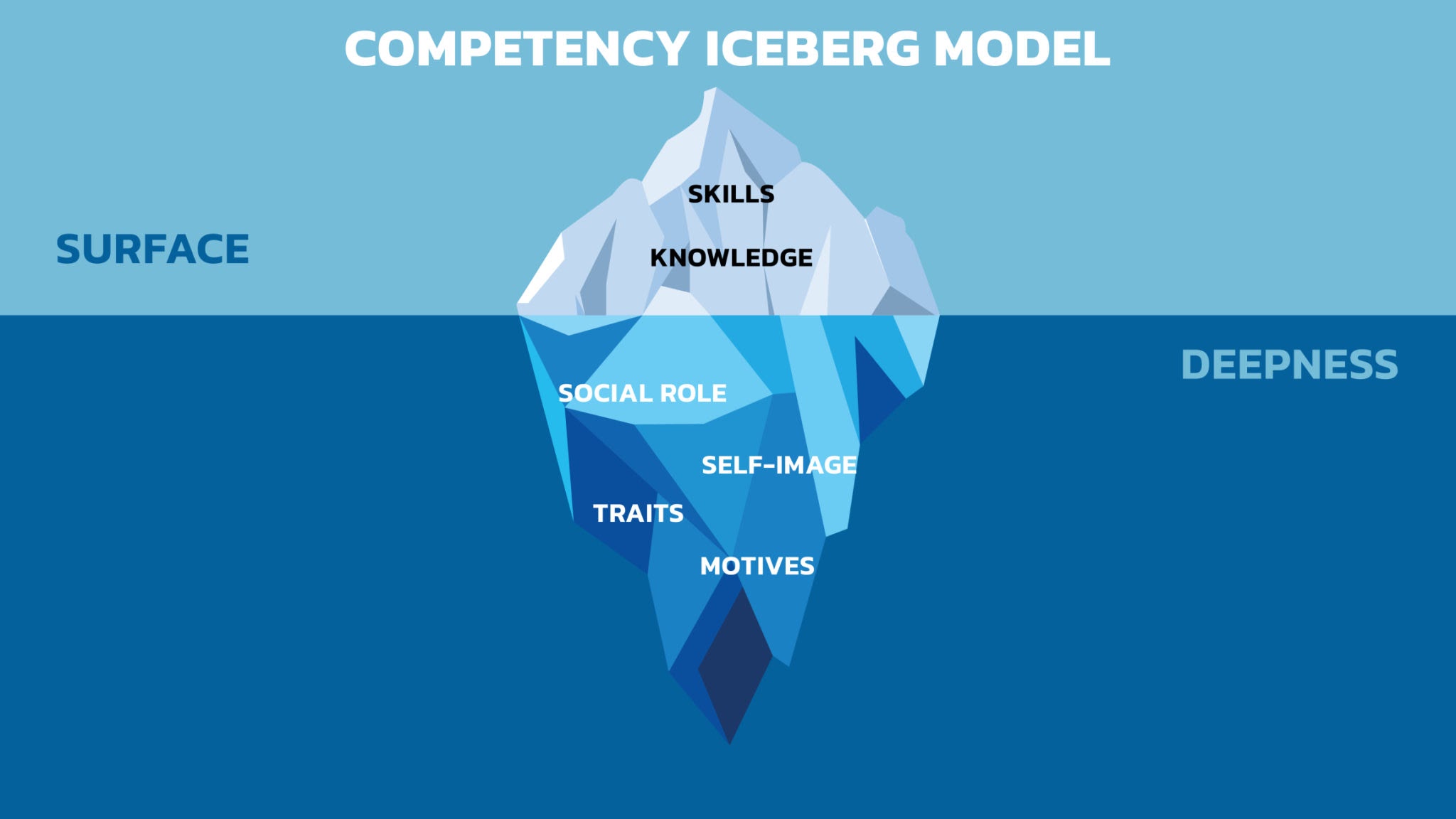
I have taught English online to some Japanese students attending Stuttgart International School in Germany. Some Japanese students struggle to express themselves in English despite daily exposure to English, due to their lack of Cognitive Academic Language Proficiency (CALP), as conceptualized by Jim Cummins.
Mastering the Logic: Beyond Translation
One reason is that Japanese differs diametrically from English in its structure. Struggling Japanese students need meticulous instruction from someone fluent in both languages to make a significant breakthrough. I can offer lessons in Japanese and English flexibly, depending on their English proficiency level, as I am a world-renowned Cambridge C2 (CPE) Proficiency holder with more than 20 years of teaching experience in Japan.
Proven Results: From Struggle to Success
Let me share an example of my achievements. Two of my students, aged 13 and 15, scored 940 and 905 points on the TOEIC in one year. Having had this success, I would be delighted to make my expertise and experience available to Japanese students studying at international schools in other locations.
Take the Next Step Together
I would be very grateful if you could speak with parents whose sons and daughters have difficulty learning English about the possibility of taking lessons with me. Here is the link to the website with a multitude of students’ compelling testimonials in Japanese, which both prospective students and their parents will indeed find useful. You may also find it useful to read the following dialogue: The Logical OS: A Conversation with Yasuhiro Shimizu, and fully understand what distinguishes my school from the vast majority of others in Japan.
The Logical OS: A Conversation with Yasuhiro Shimizu
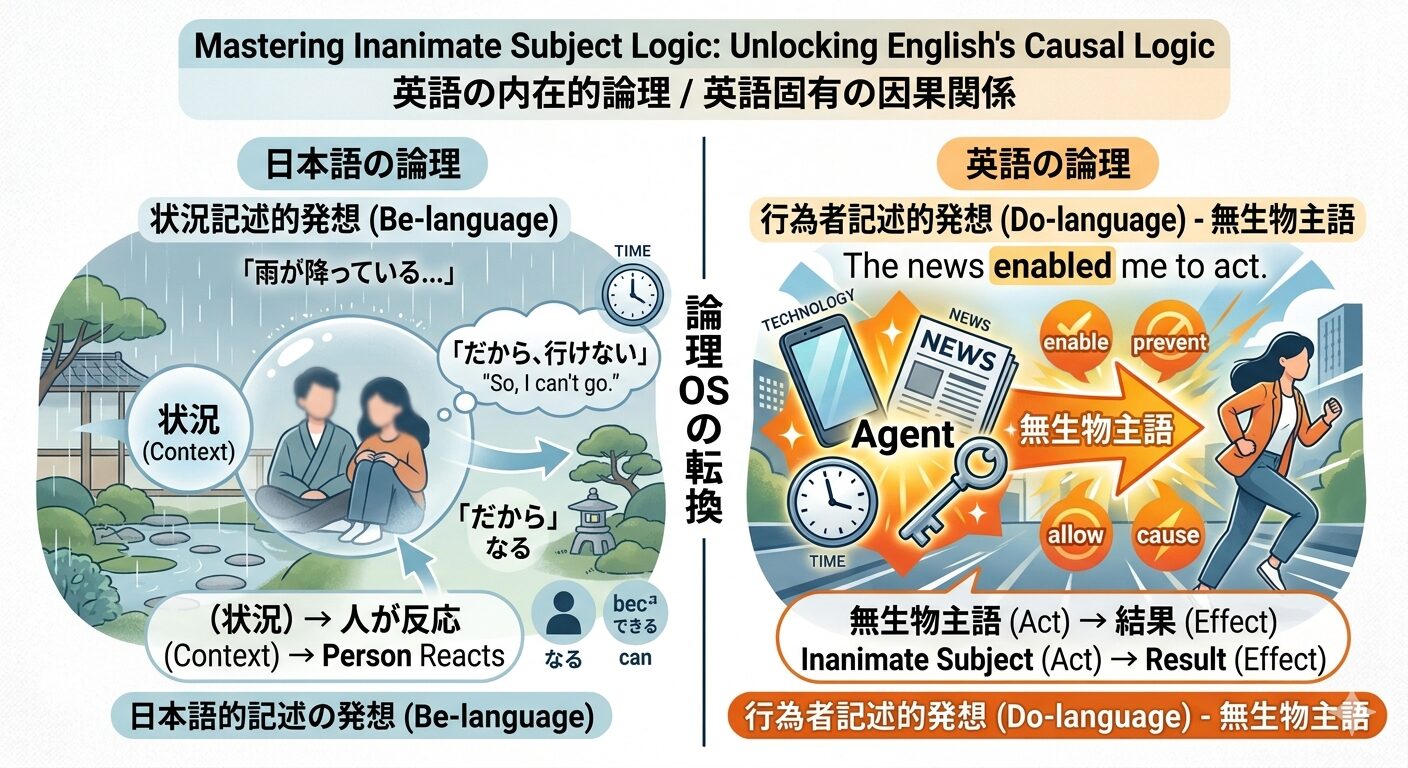
Interviewer: Most English schools in Japan focus on "survival phrases" or conversational games. However, you advocate for a "Logical English OS." Could you explain what this "Operating System" is and why Japanese learners struggle without it?
Yasuhiro Shimizu: Think of how most students translate, "Why did you come to Japan?" It is grammatically correct, but it shows they are operating a Japanese OS. If a student can say, "What brought you here?", that is a sign of an English OS. The shift from "Why did you..." to "What brought you..." isn't just vocabulary; it’s a fundamental change in the "engine" driving the sentence.
Interviewer: Why is it dangerous to stay stuck in that Japanese-influenced way of thinking, even if the student is technically "accurate"?
Yasuhiro Shimizu: Without installing an English OS, students hit a "complexity ceiling." Their English becomes redundant, cluttered with 'if', 'because', 'as', and 'because of'. Native speakers often cannot help because they use their OS instinctively; they don't know how it’s built. In English, expressing cause-and-effect is crucial, but Japanese students often fail to do so because they still use a Japanese logical framework.
Interviewer: You use a 40-pattern worksheet to help students switch their logic. For example, changing "I remembered my high school days when I heard this song" to "This song reminds me of my high school days." How does this change their progress?
Yasuhiro Shimizu: It makes their English "cool," which is a huge motivator. Merely increasing output with a Japanese OS is a sheer waste of time. What matters is improving the quality of output through using an English OS. It simplifies the language. Instead of a long, cluttered sentence, an "Inanimate Subject" does all the heavy lifting.
Interviewer: Is there a psychological shift involved? Using inanimate subjects like "The heavy snow prevented me from going out" feels a bit "unpalatable" or aggressive to some Japanese speakers, as it shifts responsibility to the environment.
Yasuhiro Shimizu: Absolutely. It is a gradual fading of the old mindset. I have students check their writing specifically for the subjects. If I, you, and we constantly appear, it’s an "ominous sign." The problem is that major exams like the Eiken don’t test for this OS; students pass with "hollow fluency."
Interviewer: What is your ultimate goal for a student who moves beyond just "passing tests"?
Yasuhiro Shimizu: I aim to elevate their English to the CALP (Cognitive Academic Language Proficiency) level, not just the BICS (Basic Interpersonal Communicative Skills) level. High test scores shouldn't be the end goal. Once the English OS is installed, their English becomes a lifelong treasure.
Yasuhiro Shimizu: Think of how most students translate, "Why did you come to Japan?" It is grammatically correct, but it shows they are operating a Japanese OS. If a student can say, "What brought you here?", that is a sign of an English OS. The shift from "Why did you..." to "What brought you..." isn't just vocabulary; it’s a fundamental change in the "engine" driving the sentence.
Interviewer: Why is it dangerous to stay stuck in that Japanese-influenced way of thinking, even if the student is technically "accurate"?
Yasuhiro Shimizu: Without installing an English OS, students hit a "complexity ceiling." Their English becomes redundant, cluttered with 'if', 'because', 'as', and 'because of'. Native speakers often cannot help because they use their OS instinctively; they don't know how it’s built. In English, expressing cause-and-effect is crucial, but Japanese students often fail to do so because they still use a Japanese logical framework.
Interviewer: You use a 40-pattern worksheet to help students switch their logic. For example, changing "I remembered my high school days when I heard this song" to "This song reminds me of my high school days." How does this change their progress?
Yasuhiro Shimizu: It makes their English "cool," which is a huge motivator. Merely increasing output with a Japanese OS is a sheer waste of time. What matters is improving the quality of output through using an English OS. It simplifies the language. Instead of a long, cluttered sentence, an "Inanimate Subject" does all the heavy lifting.
Interviewer: Is there a psychological shift involved? Using inanimate subjects like "The heavy snow prevented me from going out" feels a bit "unpalatable" or aggressive to some Japanese speakers, as it shifts responsibility to the environment.
Yasuhiro Shimizu: Absolutely. It is a gradual fading of the old mindset. I have students check their writing specifically for the subjects. If I, you, and we constantly appear, it’s an "ominous sign." The problem is that major exams like the Eiken don’t test for this OS; students pass with "hollow fluency."
Interviewer: What is your ultimate goal for a student who moves beyond just "passing tests"?
Yasuhiro Shimizu: I aim to elevate their English to the CALP (Cognitive Academic Language Proficiency) level, not just the BICS (Basic Interpersonal Communicative Skills) level. High test scores shouldn't be the end goal. Once the English OS is installed, their English becomes a lifelong treasure.
[addtoany]